Kenau Simonsdochter Hasselaer
On this website, historical women from the maritime sector share their stories. This is the story of Kenau Simonsdochter Hasselaer.
About Kenau Simonsdochter Hasselaer
- Occupation: unknown
- Lived: 1526–1588/89
- Employer: She ran her own business
- In which maritime sector did she work? Shipbuilding
What kind of work did she do?
Kenau was the owner of a shipyard (a shipbuilder, in her own words), a shipowner, and a (timber) merchant. From 1562 to 1588, she ran a shipyard in Haarlem, located behind Spaarnwouderstraat (now Houtmarkt) on the Spaarne River. She may have done this earlier together with her husband and the shipyard’s previous owner, Nanning Gerbrandtszoon Borst, who came from a Haarlem family of shipbuilders, whom she married in 1544 and who died in early 1562. Between 1562 and 1571, at least sixteen ships were built at her shipyard. These were primarily karveel ships (narrow karveel ships), with the occasional cog, ranging in value from 150 to 912 Carolus guilders, which were built on commission from Dutch skippers for inland and coastal shipping. During her absence from Haarlem, several ship certificates were issued in the name of her son Gerbrant, who was thus involved in the business.
After 1579, at least eleven more ships were built at her shipyard, which at the time was among the medium-sized to small shipyards in Haarlem. In addition to the shipyard, Kenau owned at least one ship, a narrow caravel built at her own shipyard, which sailed on the timber trade with Norway and made about five voyages per year. For this, she hired the crew (skipper and deckhands) on a per-voyage basis. In addition to the timber trade, Kenau also traded in other goods such as beer and grain, depending on circumstances. For some time, she worked as a sworn weighmaster and collector of import duties on peat in Arnemuiden, where she was registered as a pauper.
What else is there to say about her life?
Kenau lived in Haarlem from her birth until 1571. After the city was captured by the Spanish, she fled due to her role in the siege (she supplied oak timber on the one hand and was actively involved in the fight against the Spanish occupiers on the other). Between 1573 and 1578, she lived successively in Delft, Arnemuiden, and Leiden. By early 1579, she was back in Haarlem. Kenau died in 1588 (possibly 1589), around the age of 62. In June 1588, she sailed from Hoorn (as an exception) on her ship to purchase timber in Norway. Kenau was last seen in late October 1588. In May 1589, her ship appeared in the Netherlands, but under a different owner. Kenau’s daughters filed a lawsuit, in which they testified that their mother’s ship must have been attacked by pirates and that their mother had met a tragic death at sea.
*In the exhibition
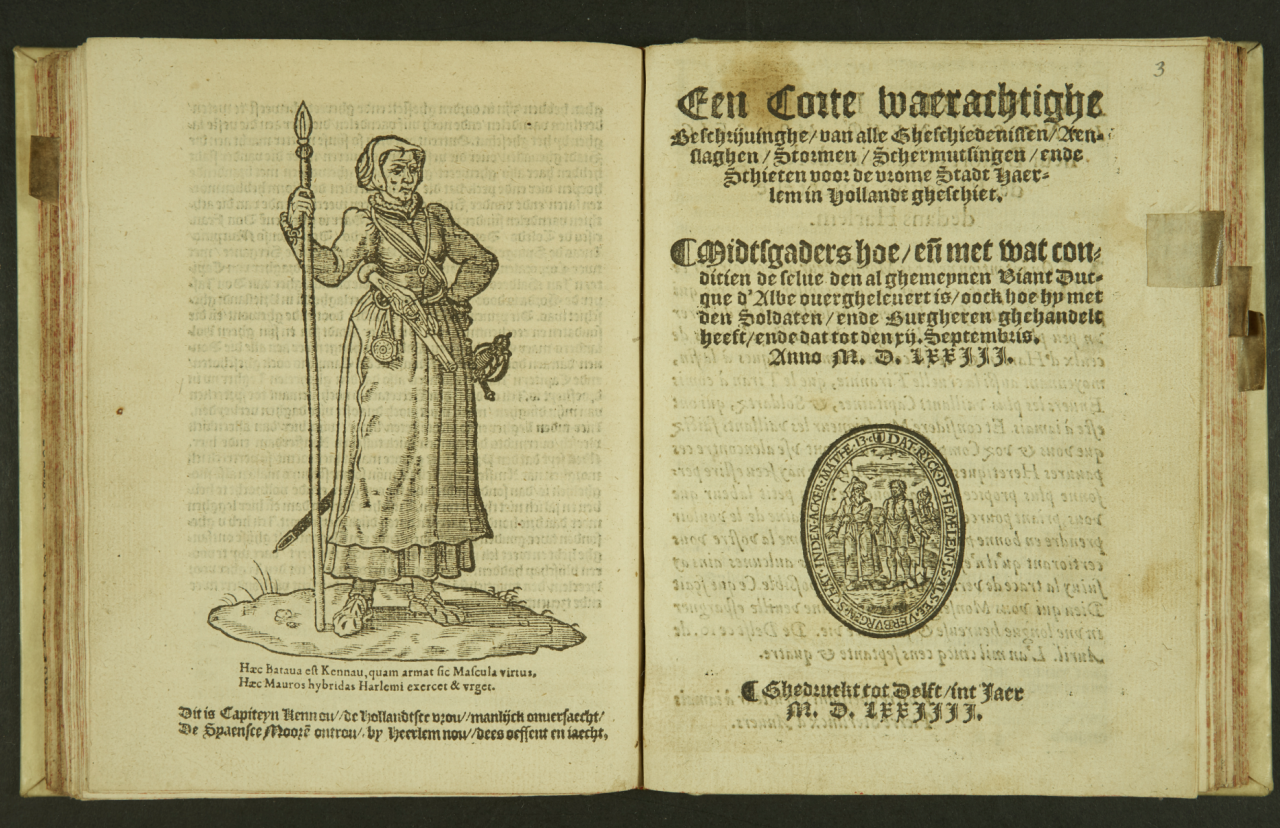
This is perhaps the oldest portrait of Kenau Hasselaer. She is depicted with a rifle, a lance, and a sword. The caption translates roughly as: “This is Captain Kenau, the Dutch woman, fearless as a man, disloyal to the Spanish Moors, now near Haarlem, who trains and hunts.” Print in *Cort en waerachtich verhael van alle gheschiedenissen, Handelinge, Aenslage, Storme en Schermutsinghe in en voor der Stadt Heerlem in Hollandt gheschiet* […] by N. Rooswijck, circa 1573.
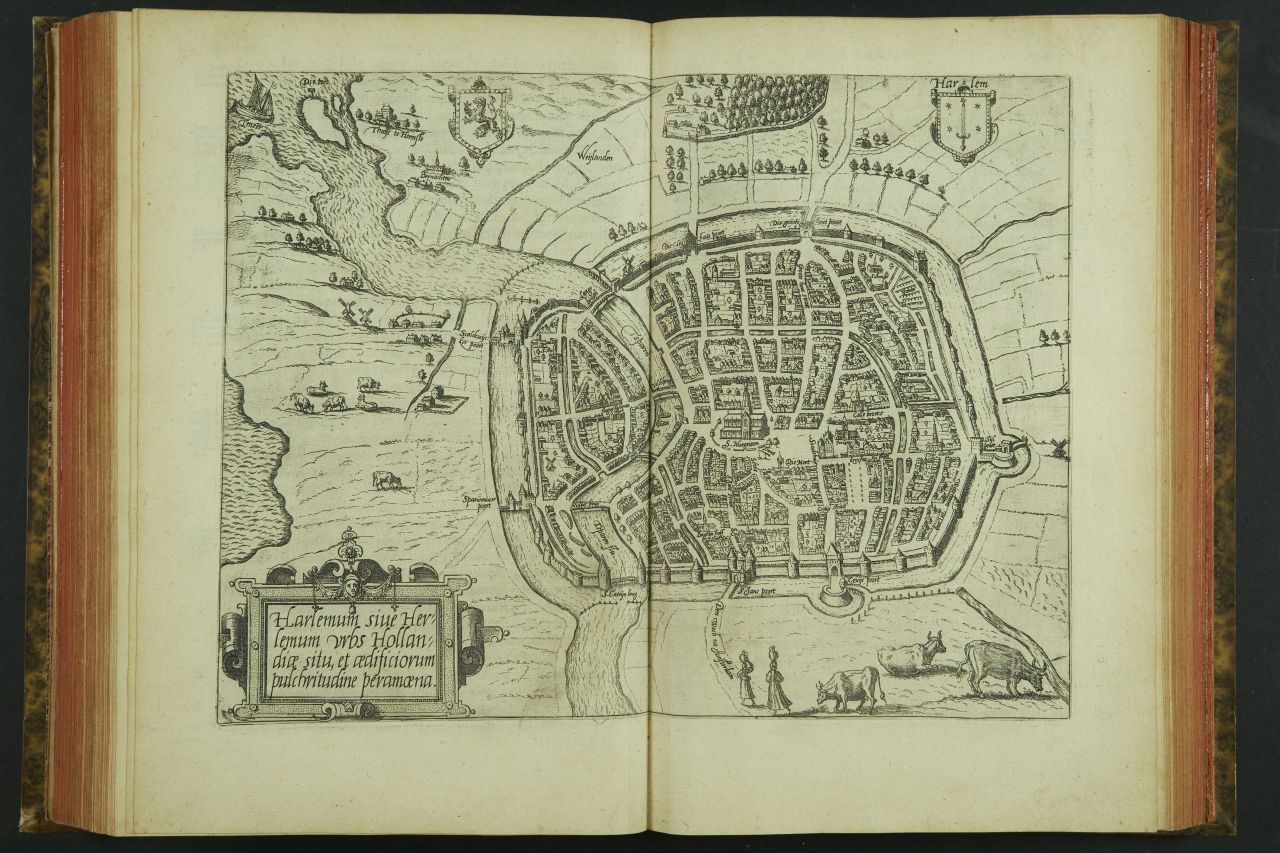
Kenau Hasselaer’s shipyard was located behind Spaarnwouderstraat (now Houtmarkt) on the Spaarne. It is shown at the bottom left of this map of Haarlem, where small ships under construction are depicted. It was one of the medium-sized to small shipyards in Haarlem at that time. Map from *Description de tous les Pays-Bas, autrement appelés la Germanie Inférieure ou Basse Allemagne* by Lodovico Guicciardini, 1582.
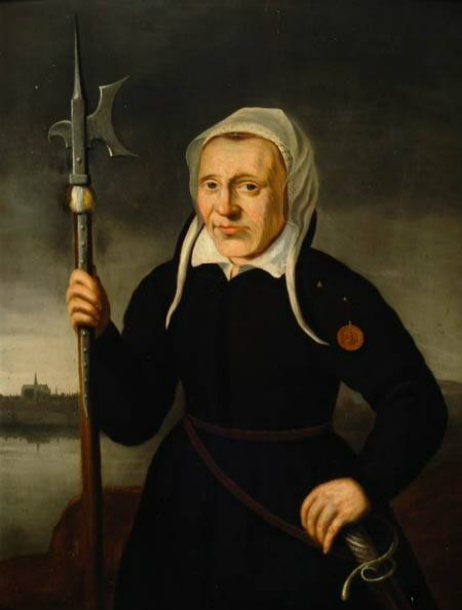
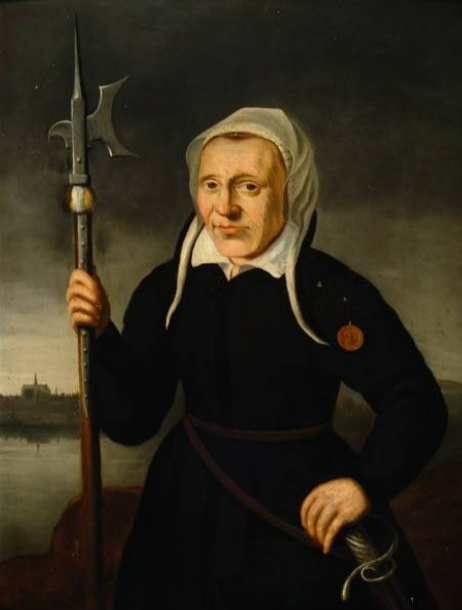
During her lifetime, Kenau Hasselaer was always portrayed as the leader of a women’s army during the Siege of Haarlem in the Eighty Years’ War. These portraits were so popular that they were often copied. At least ten copies of this painting alone are known to exist.
Painting by an anonymous artist, circa 1630. Frans Hals Museum.