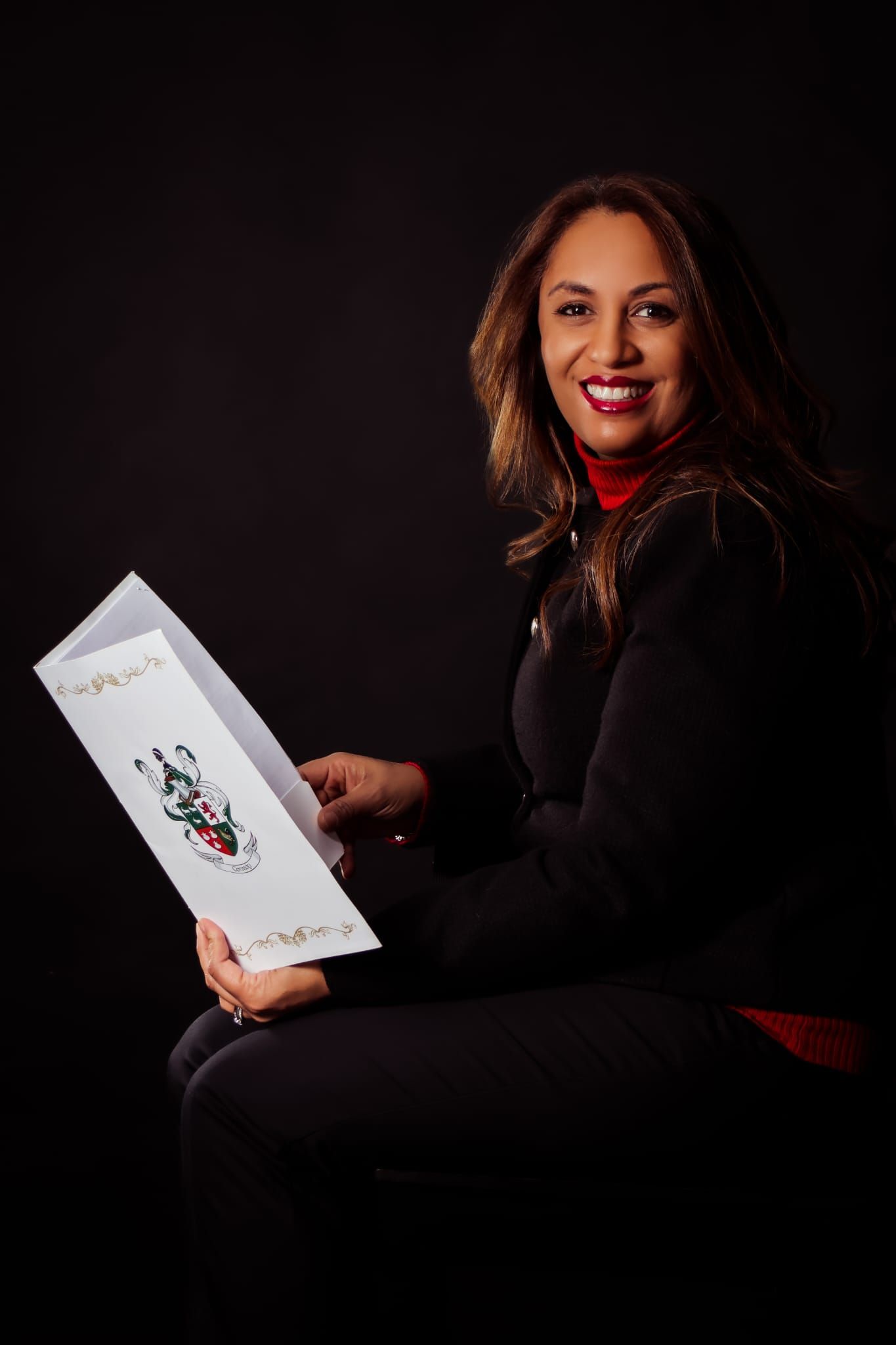
Nura Conroy - ICS Chartered Shipbroker, Shipping Lawyer & Energy Professional
On this website, women from the maritime sector share their stories. This is the story of Nura Conroy.
What do you do for work?
I work at the intersection of global trade, port infrastructure, and public-sector engagement, with a particular focus on Africa and emerging markets. My work has spanned ocean trade, inland logistics, port and energy infrastructure, risk and governance, and strategic partnerships with governments, state-owned entities, and multinational organisations. I chose this profession because trade and infrastructure are not abstract concepts, they directly shape economic inclusion, resilience, and opportunity. Ports, corridors, and supply chains determine whether economies grow or stagnate, whether communities participate or are left behind. Being able to influence how these systems are designed and governed is both a responsibility and a privilege.
Does being a women play a role in your work?
Yes, being a woman plays a very real role in my work, particularly as a woman from of colour from Africa in a traditionally male-dominated, Eurocentric industry. My career has been shaped not only by the technical and commercial demands of shipping and infrastructure, but also by navigating systems historically built without women in mind. I grew up in the shadow of apartheid, and later encountered its echoes in more subtle forms - sexism, racism and structural exclusion - across global corporate environments. These experiences sharpened my resilience, endurance and gave me a deep awareness of how power, access, and opportunity are distributed. They also shaped my leadership style: grounded, principled, and unapologetically prepared. Being a woman has meant having to be better prepared, more credible, and more persistent, often simultaneously. It has also meant learning when to speak, when to push, and when to walk away from spaces that do not value integrity or inclusion. Over time, this has become a source of strength and purpose rather than limitation and pain.
My advice to other women in the maritime industry is this: know your value, document your competence, and do not internalise exclusion as personal failure. The last part is the hardest. Build networks across borders, not just within organisations. And remember, progress rarely comes from fitting in; it comes from insisting that the system make room. We are not here by accident. We are here because the industry needs us.
What do you like most about your job?
What I value most about my work is its real-world impact. Whether supporting market access, advising on infrastructure risk, or building partnerships that balance commercial objectives with public-interest outcomes, the work requires long-term thinking, cultural fluency, and integrity. It is complex, often political, and never static, but that is precisely what makes it meaningful. At its best, this industry can be a force for connection, development, and shared prosperity. My motivation has always been to help ensure it lives up to that potential.
Shipping, ports, and energy infrastructure are not abstract concepts, they directly affect how economies function, how people live, and how countries connect to one another. Knowing that the decisions I make contribute to influence trade flows, energy security, and livelihoods across regions, particularly in emerging markets and improving socio-economic opportunities for all women regardless of origin, gives the work meaning beyond titles or transactions. I am especially motivated by roles that sit at the intersection of strategy, infrastructure, and public-sector engagement. These environments demand clarity of thought, cultural intelligence, and an ability to translate complexity into workable solutions. I enjoy building bridges, between government and business, policy and execution, global standards and local realities. What I value most is problem-solving in high-stakes, regulated environments where integrity, foresight, and collaboration matter. When done well, this work creates long-term value, resilience, and opportunity, not just for organisations, but for societies. That sense of purpose is what continues to drive me.
One experience that stays with me is from early in my career in Southern Africa, when I realised how closely infrastructure decisions are tied to dignity and opportunity. I was working on a trade and logistics issue that, on paper, looked purely operational. In reality, delays at a port were affecting food availability and employment in surrounding communities. Seeing that connection, how a decision made in a boardroom or control tower could ripple outward into daily life to create positive changes or even more challenges. I changed how I approach my work. It taught me that technical competence alone is not enough. Context matters. History matters. People matter. Since then, I have been intentional about working at the intersection of commerce, policy, and inclusion, because we have to sustain our planet and build sustainable infrastructure. It only works when it serves all members of society, and not elevate or oppress one at the expense of the other. That perspective has stayed with me throughout my career and continues to guide how I lead, advise, and advocate within the maritime and energy sectors.
My advice to other women in the maritime industry is this: know your value, document your competence, and do not internalise exclusion as personal failure